Knee Pain Knocked Him Down, Newport Hospital Got Him Back Up
Lawrence “Fred” Feld is an active guy who, by his own account, has given his knees quite a workout over time. A retired electronics engineer, Fred designed and installed automated communications and infrastructure solutions for airports, government entities, and major corporations throughout his long career, which also included years of electrical construction and building work.
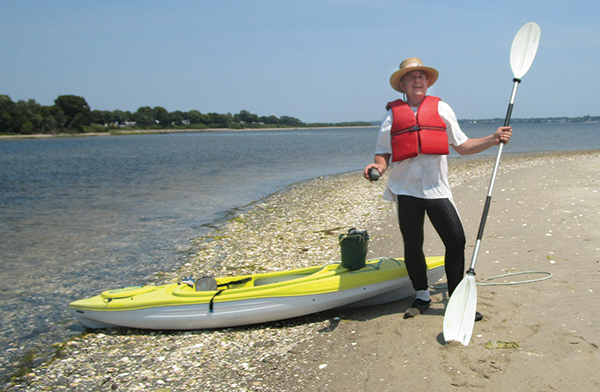 “I’ve been on my knees my whole life,” he says, “and just wore the cartilage out.”
Arthroscopic surgeries on both knees at a Boston hospital more than a decade ago gave Fred some relief. But his pain returned in recent years and he learned a knee replacement was his best bet, something he wasn’t looking forward to.
“I’ve been putting the surgery off for three years,” he says, “but last winter we were at our Florida home and the pain got so bad I couldn’t get my left leg into the car without picking it up and dragging it in.” An avid gardener, Fred adds that if he was down on his knees planting and pruning, even with very good knee pads on, later that night, he’d “almost be crying.”
As fate would have it, Fred’s neighbor in the Sunshine State was a nurse who had gone through a minimally invasive, quadricep-sparing total knee replacement surgery. She strongly recommended that Fred find a surgeon competent in this procedure when he got back to Rhode Island; his recovery time would be quicker and he’d experience less post-operative pain.
After much personal research, Fred found his way to Mouhanad El Othmani, MD, an orthopedic surgeon with the Lifespan Orthopedics Institute at Newport Hospital—and he’s glad he did.
On April 12, 2024, Fred underwent the 90-minute, same-day surgery in the capable hands of Dr. El Othmani, who was supported in the procedure by ROSA®, the robotic surgical assistant. The groundbreaking technology, which Newport Hospital acquired last year, enhances the capabilities of expert surgeons while ensuring the highest level of
patient care.
“With ROSA, we’re able to give patients, like Fred, an elevated and personalized approach to knee replacement,” Dr. El Othmani explains, “because it allows us to make smaller incisions, which reduces scarring and minimizes bleeding, and offers more precise implant placement and increased longevity.”
Today, Fred is well on his way to a full recovery. He’s regained range of motion in his knee and traded in his constant pain for occasional stiffness, which will subside in time. Most importantly, he’s back to doing the things he loves—which, he says, includes praising his care team.
“I tell people all the time, if you need knee surgery, go see
Dr. El Othmani and get the surgery done at Newport Hospital. It’s worth the trip, no matter where you live. The people who work there are the best!”
Colorectal Cancer Screening:
‘It may just save your life!’
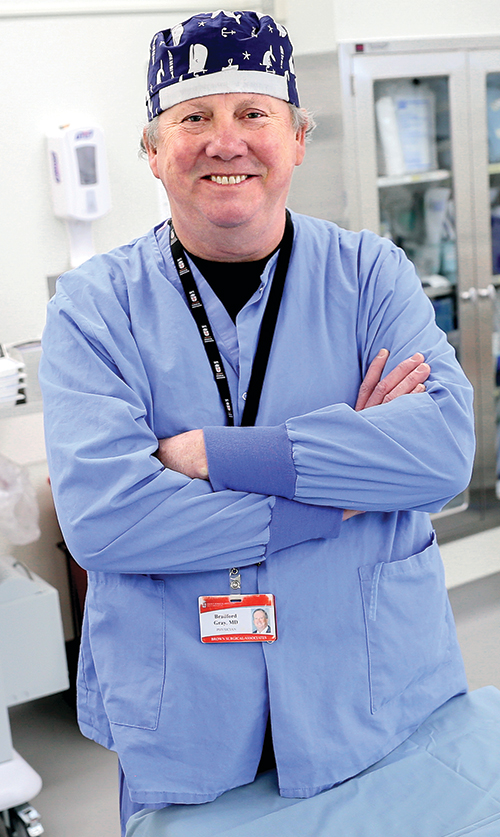 Bradford Gray, MD, FACS, is a general surgeon at Newport Hospital, specializing in the management of malignant skin conditions, endoscopic procedures, and advanced laparoscopic surgery. Below,
Dr. Gray discusses the risk factors and signs of colorectal cancer and how screening and early detection can improve the chances of survival and prevent the disease from spreading.
How prevalent is colorectal cancer?
With an estimated 153,000 new cases in 2023, colorectal cancer is one of the most commonly diagnosed cancers in the United States. And with nearly 53,000 deaths, it’s also a leading cause of cancer-related deaths. While overall cases have steadily declined over the years—thanks in large part to routine screening—the number of people under the age of 50 who are being diagnosed with, and dying from the disease, is rising at an alarming rate.
What are the signs and symptoms?
Colorectal cancer may not cause any symptoms in its early stages. However, as it advances, signs and symptoms may include changes in bowel habits, such as diarrhea, constipation, or alternating bowel movements; rectal bleeding or blood in the stool; abdominal pain or cramping; and unexplained weight loss, fatigue, nausea, or vomiting.
Who’s most at-risk?
In addition to family history and ethnicity, other factors that can increase the risk of developing colorectal cancer include obesity, physical inactivity, smoking, and a diet high in red or processed meat. Maintaining a healthy lifestyle is one of the main ways to prevent colon cancer. This includes regular exercise; eating a balanced diet with plenty of fruits and vegetables; and avoiding smoking and excessive alcohol intake.
What are the recommended screening protocols?
In 2021, health officials lowered the recommended screening age from 50 to 45. Those at average risk should begin screening then, and their options include a colonoscopy, a fecal immunochemical test, or a stool DNA test. These tests are designed to identify any abnormalities early before they can progress to cancer. It should also be noted that those in at-risk categories should consider getting screened earlier than 45.
Overall, the good news is that early detection—with any cancer—can improve the chances of survival and prevent the cancer from spreading. Even better, routine screening and the removal of pre-cancerous polyps can prevent cancer from forming altogether. So, get screened. It may just save your life!