The Bradley Bulletin Logo

News and Notes for Our Friends and Supporters

Summer 2026

Upholding a Tradition of Compassion in Bradley’s Efforts

For Kristine and Bill David (pictured), a life devoted to helping others has been more than a career. Having met through their shared work in human services, they built a partnership grounded in service to others—a commitment that has continued through decades of professional leadership, volunteerism and community involvement. Today, that principle draws them to support Bradley Hospital, where they see those values reflected every day.
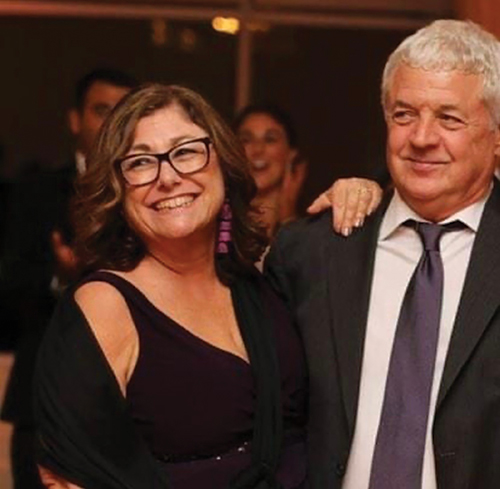
Kristine and Bill David, longtime community volunteers and supporters of Bradley Hospital dressed in formal attire smile warmly with one resting a hand on the other's shoulder in a dimly lit party setting.The couple’s dedication to improving lives and strengthening communities extends far beyond their professions. For more than three decades, both have been active in Rotary, taking on leadership roles and working to expand support for community initiatives. They have championed service-oriented projects and built lasting relationships grounded in a shared commitment to giving back.

Both Kristine and Bill dedicated their professional lives to supporting individuals and families facing complex challenges. Bill spent more than 40 years in human services, beginning in direct support roles and later leading programs focused on employment and rehabilitation. Motivated by human connection, he describes his work as rooted in a genuine appreciation for people and the difference compassionate care can make.

“I’ve always believed that when you invest in people, you see that impact come back many times over,” Bill reflects, a perspective that continues to shape how he views both his work and his community involvement.

Both have been guided by the belief that every individual deserves dignity, support, and the opportunity to thrive.

Kristine’s path was similarly shaped by service, beginning with early volunteer experiences while attending The Wheeler School. She dedicated her career to supporting children and families with disabilities; and focused on helping others navigate systems of care and build stability. Her work brought her alongside families at pivotal moments, helping them access resources, build support networks, and move forward with greater confidence.

“We’ve both worked with families who are struggling,” Kristine shares. “And as parents and now grandparents, it feels important to give back in a way that supports them.”

For the Davids, Bradley represents a place where families find not only care but also understanding. They are especially moved by the hospital’s ability to support the entire family, and view Bradley as part of a vital shift toward comprehensive care that meets families where they are. Kristine and Bill believe that accessible mental health care is essential and that institutions like Bradley play a critical role in making it possible.

Their relationship with Bradley began when Kristine was invited to join the committee supporting the hospital’s annual Bravo Bradley gala. Since that time, they have become deeply engaged members of the Bradley community and significant contributors to the hospital.

“What stands out to me is how many people here are truly invested in helping families and improving outcomes for kids,” Bill says. “There’s a real sense of purpose behind everything Bradley does.”

Research Keeps Kids Safe Following an Inpatient Admission

For children in psychiatric crisis, hospitalization can be lifesaving. Yet, what happens next often determines whether they recover or return for further inpatient care. At Bradley Hospital, research is helping change that trajectory for children and families.

Two people are sitting and having a friendly conversation in a bright room with sheer curtains and a wooden door in the background.Nearly one in three young psychiatric patients—and as many as 40 percent—will be rehospitalized at some point in their life. Bradley researcher Jennifer Wolff, PhD, is working to reduce that number. Dr. Wolff and her team of Bradley researchers developed COPES (Coping, Problem Solving, Enhancing Life, Safety Planning), a skills-based intervention designed specifically for adolescents ages 12–18 in inpatient care.

COPES is built for intensive, real-world conditions. Milieu staff, social workers, and other clinical staff integrate short, focused sessions—sometimes just 20 minutes—into daily care.

“The kids we work with often tell us they need something they can use right now,” says Dr. Wolff. “Our goal is to make sure they leave the hospital with practical skills, and that the adults around them know how to reinforce those skills every day.”

At Bradley and within nine community agencies—trained on COPES by Bradley clinicians and staff—more than 5,000 adolescents have already participated. Even brief exposure has been linked to lower rates of rehospitalization, an important shift for young people at their most vulnerable.

While many of our research programs focus on outpatient populations, Bradley is also committed to studying and improving care where the need is urgent—inpatient units, where children are in acute crisis and time is short. By bringing research directly into these settings, new approaches can make an immediate difference.

COPES is used in community programs across Rhode Island and is poised to expand to hospitals nationwide, bringing practical, evidence-based care to more youth.

Teen Mental Health First Aid Helps Students Support One Another

Children and teens across the country continue to experience an unrelenting youth mental health crisis, with rising rates of depression, anxiety, substance use, addiction, and suicidality. Teens are feeling that strain especially acutely as they navigate the social, emotional, and physical changes of adolescence. In Rhode Island, 40 percent of high school students in recent years reported feeling sad or hopeless for more than two weeks, underscoring the urgency of giving young people tools to recognize when a friend may be struggling.

Through teen Mental Health First Aid (tMHFA), the Bradley Learning Exchange is helping schools and youth-serving organizations address that need with an evidence-based program for students in grades 9–12. Training teaches teens how to identify, understand, and respond to signs of mental health and substance use challenges in their friends and peers. It does not teach teens to diagnose. Instead, it helps them recognize warning signs, open the conversation, and know when to involve a responsible adult.

“Teens are often the first to notice when a friend is having a hard time, and this training helps them respond with empathy, start a supportive conversation, and connect that friend to a trusted adult who can help,” says Kim LaFountain, Bradley’s Supervisor of Mental Health First Aid.

To offer tMHFA, organizations must also ensure adults are prepared to respond. National guidance requires that at least 5 percent of staff be trained in Youth Mental Health First Aid, helping to create a network of trusted adults students can turn to when concerns arise.

A group of five people sitting on steps outdoors, smiling and engaging in conversation, with one person holding a smartphone.