2026
Bradley Hospital Helps “Jedi” AJ Turn Courage Into Freedom from OCD
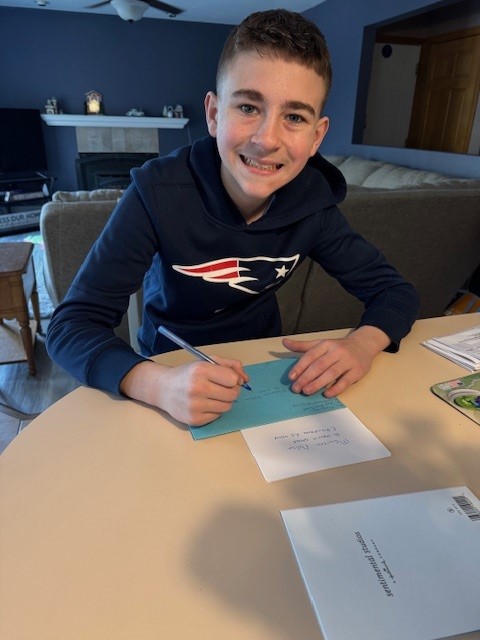 When we first came to Bradley, we didn’t even know what obsessive compulsive disorder (OCD) really was,” recalls Bonnie Freehling. “I thought it was about lining things up or keeping things neat. I had no idea it could look like this—like my child drowning in thoughts he couldn’t escape.”
At age 12, AJ Freehling was stuck in a relentless cycle of fear and compulsions. Intrusive thoughts consumed his days. Even simple things, like getting into a car, moving from room to room, and trying to fall asleep, felt impossible.
Many families don’t realize how severe OCD can become, or that highly effective, research‑informed treatment even exists. Bradley Hospital’s Pediatric Anxiety Research Center (PARC) is one of the nation’s leaders in this work, helping close a care gap that leaves most children without access to the gold‑standard therapy—exposure and response prevention (ERP).
Through Bradley’s IMPACT (Improving Access to Child Anxiety Treatment) program, researchers are testing scalable ways to deliver ERP, including team‑based models and real‑world exposure coaching. Early results show these approaches can expand access while maintaining the effectiveness families depend on.
AJ first received ERP through IMPACT, working session by session to face fears he once avoided. Later, he joined NExT (Neuromodulation + Exposure Therapy), a study exploring whether pairing ERP with gentle, noninvasive transcranial magnetic stimulation could further strengthen outcomes for youth with OCD.
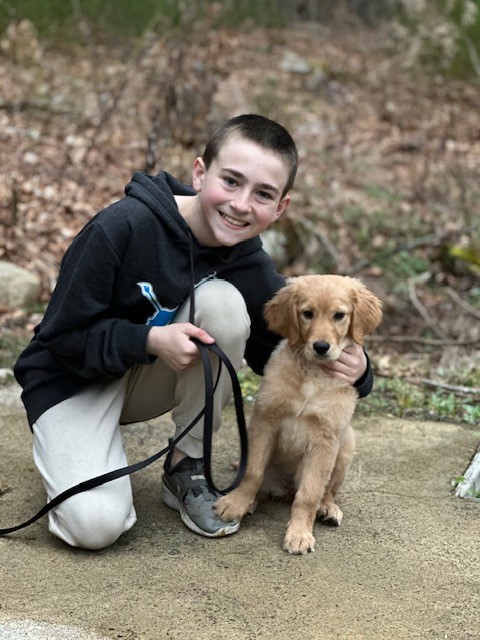 “It was the hardest thing we’ve ever done,” Bonnie says. ERP teaches kids to sit with frightening feelings instead of doing rituals that relieve them for only a moment. “As a parent, not being able to comfort your child—it broke me. But AJ was so strong.”
His team saw it too, nicknaming him “the Jedi” for his courage. “I learned you have to build the stairs one at a time,” AJ says. “Every time I did, I felt like a Jedi leveling up.”
“ERP is the most effective treatment we have for OCD, yet too few children can reach it,” says Jennifer A. Herren, PhD, a Bradley psychologist and research scientist. “Stories like AJ’s show why research like IMPACT and NExT is critical—not just to innovate, but to make effective care available to every child who needs it.”
Over the following months, AJ began achieving milestones that once felt out of reach: riding in a car without mom, sleeping alone, even traveling out of state. “Now,” AJ grins, “I have room in my brain for other things, like starting a business someday.”
Today, AJ is thriving. He still has challenges, and he knows progress isn’t always linear. Still he has tools, confidence, and a future he couldn’t see before participating in a Bradley study.
“The end goal is better than the pain,” Bonnie shares. “Bradley, and the research that happens here, gave my son his life back.”
Advancing Treatment Options for Youth with OCD
For many adolescents with obsessive compulsive disorder (OCD), symptoms can persist, even with excellent care. That’s why Bradley Hospital is helping lead NExT (Neuromodulation + Exposure Therapy), a multisite clinical trial designed to strengthen outcomes for adolescents and young adults ages 12–21.
Bradley researchers are testing whether adding transcranial magnetic stimulation (TMS)—a well-tolerated, noninvasive technique—can further enhance exposure and response prevention (ERP) for youth with OCD. The trial reflects an important next step: building on what works and exploring ways to make treatment even more effective for more young people.
This work reflects Bradley’s commitment to turning research into care that changes lives. For some adolescents, adding one more tool alongside ERP could make treatment more effective and symptom relief more lasting. Advancing studies like NExT moves us closer to the next generation of care, so more young people can reclaim their days and their dreams.
 “NExT helps us explore what additional tools might support young people, so they can get the most out of ERP therapy,” says Kristen M. Benito, PhD, Bradley psychologist and NExT research lead. “Our goal is to understand how to give more adolescents relief, confidence, and room to grow.”
Participants receive ERP alongside either active or inactive TMS so researchers can understand what difference neuromodulation may make. Families participate in daily visits over about three weeks, including brief assessments and two MRI scans—all at no cost and with compensation for their time.
“Every step forward brings us closer to a future where more young people can reclaim their days and their dreams,” says Dr. Benito.