The Bradley Bulletin Logo

News and Notes for Our Friends and Supporters

Winter 2026

Driven by Compassion to Help Strengthen Bradley’s Impact

Carol and Jonathan Feinstein (pictured) share a conviction that shapes everything they do: that families deserve hope when life feels hardest. “Whoever saves a life, saves the world,” Carols says of her family’s guiding principle.
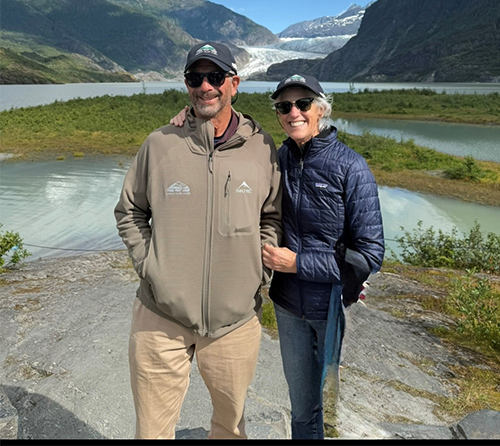
Carol and Jonathan Feinstein, Bradley Hospital supporters and advocates for children and families, featured in the Winter 2026 Bradley BulletinFor the Feinsteins, this grew from their own experience navigating a serious health challenge with their then teenage son and directly from his writing during recovery. While decades have passed, this perspective has deepened their compassion for families in crisis and further strengthened their resolve to support Bradley.

Carol’s commitment to children runs through every chapter of her story. From years spent as an educator and school librarian to her work in development for the American Cancer Society, she has always believed in the power of learning, care, and philanthropy to shape young lives. When friends and longtime Bradley Hospital supporters Rosemary and Mehdi Khosrovani invited the Feinsteins to attend Bravo Bradley in 2019, Carol shares, “The mission felt like home. Bradley is a place where healing happens, one step at a time.”

What moves Carol and Jonathan most is the impact Bradley has on everyone who walks through its doors. “There is incredible support for the entire family,” Jonathan explains. “Yes, the child is struggling with their mental health, but everyone in the family is affected.” Today, Jonathan and Carol channel their passion into supporting Bradley as a Governor and Foundation Board Trustee, respectively.

“You walk in and sense the care behind every detail. It’s not just a building; it’s a promise to families,” Jonathan recalls of the couple’s first tour of Bradley. Carol felt it too, in ways that touched her heart as a mother. The atmosphere wasn’t just welcoming; it radiated calm and reassurance. “First impressions are lasting,” she says. “You feel like you’ve stepped into a place where people truly understand what families need.”

For Jonathan, Bradley also represents something he considers rare in Rhode Island—true excellence. “There aren’t many places that stand out like this,” he says. “Bradley does, and that matters.” Jonathan hopes his family’s support—and that of the community—will help Bradley to safeguard staffing, funding, and research for what he calls “Rhode Island’s most special place of healing for families who need it most.”

Carol and Jonathan value tangible, visible impact. “If my dollar helps in raising money for a crayon, then OK, that’s what we’re going to do,” Carol shares, pointing out that everything big and small—from healing arts to new play spaces—shapes a child’s experience and supports how they learn, cope, and heal while at Bradley.

“One child at a time” is more than a motto for the Feinsteins. It’s a promise that means honoring each skill learned, every family steadied, and each day with more calm than the day before. They believe Bradley is where those moments add up, becoming pathways forward for children and the people who love them.

Carol offers reassurance to parents just beginning their journey with Bradley, “Trust the process and trust them. They know what they’re doing.”

Why Sleep Matters More Than Ever for Adolescents

Sleep isn’t just rest. It’s the foundation for emotional regulation, learning, and resilience. Yet for many adolescents, early school days, after-school activities, homework, and late nights often make getting enough sleep a challenge. Research led by Bradley Hospital’s Sleep and Chronobiology team shows that even modest sleep loss can seriously impact both mental health and brain function.

“Just one to one-and-a-half hours less sleep for five nights is enough to impair learning,” explains Jared Saletin, PhD, Associate Director of Bradley’s Sleep Lab. “And even a single night of short sleep can alter how the adolescent brain works in the short term.”

Bradley researchers are studying how sleep affects adolescent mental health, learning, and emotional well-being.The consequences go far beyond feeling tired. Chronic poor sleep during adolescence increases a teen’s vulnerability to depression, anxiety, substance use, and even incidences of suicidal ideation. Bradley researchers have uncovered that ADHD symptoms and the effects of sleep loss on the brain can appear almost identical in the brain, reinforcing how critical healthy sleep is for teens who might already be at risk.

Through its nationally recognized COBRE Center for Sleep and Circadian Rhythms and major National Institutes of Health-funded initiatives, Bradley is pioneering a new era of research. These programs aim to transform behavioral healthcare for young people everywhere, opening doors to healthier minds, stronger resilience, and lasting hope. The group’s early findings illustrate why this research matters: children with ADHD are more vulnerable to short sleep than their peers. Additionally, their studies on circadian rhythms reveal that teens’ biological clocks shift later as they mature, making early school start times a real barrier to adequate rest.

“Better sleep means better health, better learning, and better emotional well-being,” says Mary Carskadon, PhD, Director of the Sleep and Chronobiology Research Lab and Director of the COBRE Center. “Every discovery brings us closer to improving the lives of children and families.”

Bradley School Providence Helps Students Build Skills for Life

At Bradley School Providence, vocational programming is transforming futures for teens with behavioral health challenges, helping them gain confidence, independence, and the workforce readiness they need to thrive. These hands-on experiences go beyond job training. They strengthen social and emotional skills, problem-solving abilities, and resilience—supporting success in school, work, and the community.

Bradley Schools are private, school-funded, educational programs for children and adolescents whose psychiatric and behavioral needs cannot be met in a public-school setting. The six freestanding schools and embedded classrooms serve between 350 and 400 students each year.

The Bradley School Providence provides special education to more than 150 students aged 10 to 21. In 2025, the school increased the number of vocational classrooms, creating space for students to explore careers, practice teamwork, and translate behavioral progress into real-world settings.

“Our goal is to give students real-world experiences in a safe, supportive environment,” says James Brcak, PsyD, Clinical Director. “We are grateful that philanthropic support has helped us to offer these valuable programs.”

Culinary arts is a favorite, where students cook up everything from homemade salsa to crispy fingerling fries and giant chocolate chip cookies. Students receive hands-on culinary instruction at the Culinary Hub of Providence (CHOP), offered in collaboration with the Genesis Center Culinary Arts Program.

Students at Bradley School Providence participate in vocational education programs that build workplace and life skills.

Looking ahead, the school will introduce barbering instruction. The program will teach technical skills alongside customer service and health practices, preparing students for post-secondary training and employment.

“These experiences show students they can thrive,” says Dr. Brcak. “It’s not just about job skills—it’s also about confidence, independence, and hope for impactful, fulfilling lives.”