2025
From Crisis to Confidence: How Bradley Hospital Helped Nathan Find His Strength On and Off the Mat
Ten-year-old Nathan felt like he was constantly getting it wrong. His jokes didn’t land the way he intended, and classmates didn’t understand him. School wasn’t a place where Nathan felt like he fit in; it was a place where he felt alone.
 “Nathan just wasn’t happy,” Nathan’s mother, Amanda, recalls. “It wasn’t just school—it was everything. He felt different, and he didn’t know why. And the more he struggled, the more it seemed like nothing was working.”
Amanda had done everything she knew to get Nathan help and support, including therapy. Yet, following an alarming incident at school, Nathan’s clinician recognized that his needs had outgrown what she could offer. “She was so honest with me,” Amanda shares. “She told me, ‘I don’t think I’m the best person for him right now—but I know where he can get the help he needs.’”
That place was Bradley Hospital.
On the inpatient unit, clinicians stabilized Nathan and conducted a thorough evaluation, officially diagnosing him with autism, anxiety, and depression—conditions that had gone unrecognized for years. Before his hospitalization, Nathan had been diagnosed with ADHD, but the full picture of his challenges had not been clear until then. Nathan then transitioned into Bradley’s Children’s Partial Hospital Program to continue treatment.
“This program is about more than treatment—it’s about giving children and their families the tools to navigate life’s challenges together,” shares Margaret Azar, PsyD, Nathan’s provider at the Children’s Partial Hospital Program in East Greenwich. “We focus on real-life application, so the skills they learn here help them at home, in school, and in relationships.”
Over several months, Nathan learned how to regulate his emotions, developed tools to help him navigate social situations, and learned how to communicate and build connection. Amanda also learned new ways to support her son, communicate with him, and manage her own responses to stressful situations.
A key focus was preparing Nathan to return to school. Although he entered during the school year, he was able to continue his studies throughout. The Bradley team also worked closely with Amanda and educators to create a transition plan that ensured he had the academic and emotional support he needed.
“They didn’t just send Nathan back and hope for the best,” Amanda explains. “They thought of everything—even small things, like helping Nathan decide what to say when kids asked where he had been. These things made a huge difference.”
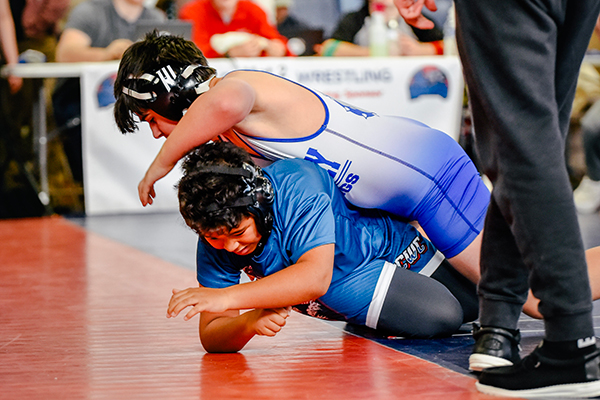
Nearly one year later, Nathan is thriving in school, forming friendships, and embracing extracurricular activities. A dedicated athlete, he recently placed second in a statewide wrestling competition and was named Student of the Week for the first time in his life.
“Nathan used to feel isolated, like he didn’t belong,” Amanda recalls. “Now, he talks about his friends, celebrates his wrestling wins, and carries himself with a confidence I never thought I’d see.”
For families like hers who might be considering the program, Amanda offers reassurance. “It’s hard in the moment,” she says. “But when I look at my son now—how far he’s come, how happy he is—I know it was the best decision we ever made.”
Bradley Hospital’s Children’s Partial Program is a Bridge Between Hospital and Home for Children in Crisis
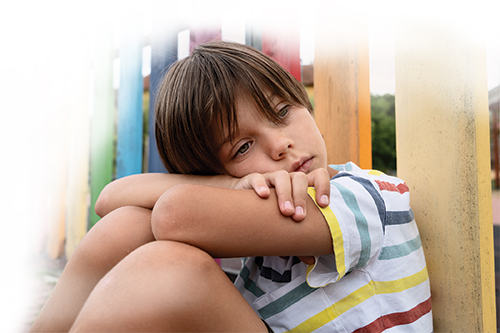
When a child is struggling—including meltdowns at home, overwhelming emotions at school, or a sense that nothing seems to help—it can leave families and caregivers feeling exhausted and unsure where to turn. Some children need more than weekly therapy, but inpatient care feels like too big of a step. Bradley Hospital’s Children’s Partial Program does just that, providing intensive support while helping children maintain stability at home.
“So many of the kids we see feel out of control, like their emotions are too big to handle,” says Mandy Witkin, LICSW, Clinical Director of the program in East Greenwich. “Bradley gives them the space to reset, learn coping skills, and start seeing themselves in a more positive way.”
 This Monday-through-Friday day program—offered both on the Bradley campus in East Providence and in East Greenwich—gives children ages seven through twelve a structured environment where they receive therapy, learn emotional regulation strategies, and practice social skills, all while continuing their education. Sessions last between four and eight weeks, depending on the child’s needs, and are supported by an interdisciplinary treatment team that includes clinical psychologists, child psychiatrists, nurses, pediatricians, milieu associates, nutritionists, speech and language pathologists, occupational therapists, and support staff.
Families play a key role, too. “Healing doesn’t just happen in a therapist’s office—it happens at home, at school, and in everyday moments,” says Mandy. “That’s why we partner with caregivers, giving them the tools to support their child long after the program ends.”