The Bradley Bulletin Logo

News and Notes for Our Friends and Supporters

Fall 2025

One Couple’s Commitment to Mental Health and Community
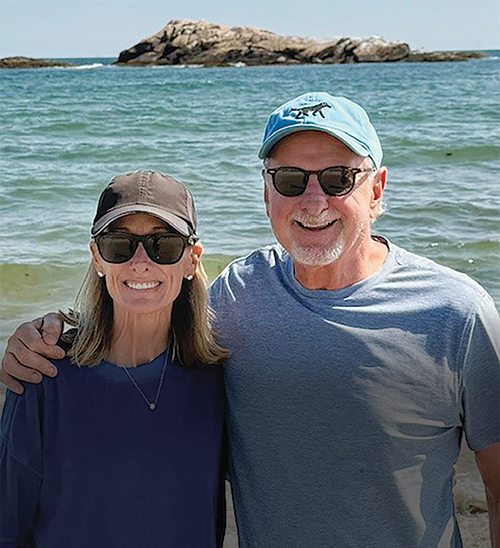
Lorrie and Ken DeAngelisFor Ken and Lorrie DeAngelis (pictured), philanthropy has always been deeply personal. With eight children and five grandchildren between them, family is at the center of their lives, shaping their giving.

Ken, a Rhode Island native raised in Barrington who now spends summers with his family in Little Compton, built his career investing in innovation. He co-founded Austin Ventures, a firm that helped transform the Texas business landscape. The DeAngelis family and their foundation have directed millions to causes close to their heart, from education to homelessness to mental health.

“Family-focused therapeutic help needs to involve the whole family,” Ken explains. “So many people want to send their kids somewhere and have them fixed, but that’s not at all what it is.”

That belief, born out of personal experience with mental health challenges in their own family, drew the DeAngelises to Bradley Hospital. Introduced by longtime friend Jeff Hirsh, Lorrie toured the campus and was struck by the unique role Bradley plays in Rhode Island and beyond.

Both Ken and Lorrie felt there was no place quite like Bradley. From the very beginning, the hospital’s 
potential struck them as extraordinary—especially how far-reaching the programs could be.

Lorrie, who studied transpersonal psychology, the intersection of spirituality and psychology, was equally drawn to Bradley’s mission. “I was impressed with the variety of therapeutic methods used to treat the whole child, such as art and music therapy. Bradley’s commitment to innovative approaches tells me you’re focused on achieving long-lasting, successful outcomes for families.”

In recent years, the DeAngelis Family has supported a range of causes, including the Hyde School in Maine, where Ken once chaired the board; Mobile Loaves & Fishes, which provides housing and services for people experiencing homelessness in Austin; Shatterproof, a national nonprofit dedicated to reversing the addiction crisis; and arts organizations, including Austin City Limits. The common thread, they note, is innovation and impact.

“We feel motivated by forward-looking organizations with an entrepreneurial spirit,” Ken reflects. “Bradley is no different. They’ve created a differentiated, innovative service offering that stands alone. And that spirit keeps Bradley pushing forward today.”

The couple attended Bravo Bradley for the first time in 2025, where experiencing the larger hospital community only deepened their connection. “At the gala, the conversations were real, open, and honest,” Ken recalls. “Life is messy and hard. The more that can be talked about openly, the more we reduce stigma. That community piece is powerful.”

For the DeAngelises, supporting Bradley is both a personal commitment and a hopeful investment in the future.

“I see Bradley Hospital as a beacon of hope not only 
for Rhode Island, but for the world,” Ken says. “We 
need to think about it in that context, because it 
touches everyone.”

The Bradley Center Helps Teens
Do the Hard Work of Healing

The Bradley Center in Cranston fills a critical gap for adolescents ages 12 to 17 facing acute mental health and substance use challenges. As the only short-term acute residential treatment program of its kind in Rhode Island, the 16-bed center provides intensive therapy in a safe, structured setting—offering a vital alternative to hospitalization.

“What makes the Bradley Center special is the blend of safety and intensive therapy,” says Amanda Pelletier, LICSW, Clinical Director. “On an inpatient unit, the focus is stabilization. Here, we do that while also helping teens and families tackle the hard issues that may have felt impossible at home.”

With an average stay of just two to three weeks, teens receive individual, group, and family therapy, supported by expressive therapies such as art, yoga, and dance. The Center also offers a dedicated track for co-occurring substance use, helping teens learn healthy ways to cope and rediscover joy.

The Bradley Center renovations

Philanthropy has been essential in making the Bradley Center feel as healing as the care itself—funding renovations, sensory tools, and programs like healing arts. These resources not only enrich treatment but also teach teens that they can thrive without risky behaviors.

Looking to the future, Amanda hopes to expand research and training opportunities to ensure that the Center and its team remain on the leading edge of adolescent mental health care. “The Bradley Center gives parents relief from the constant worry of keeping their teen safe,” she says. “That safety allows us to do the real work of healing.”

Inspiring the Next Generation of Sleep Researchers

The Bradley Hospital Sleep Research LabFor nearly four decades, what is now Bradley Hospital’s COBRE Center for Sleep and Circadian Rhythms in Child and Adolescent Mental Health has advanced knowledge of how sleep and circadian biology influence youth behavioral health. Central to this legacy is the William C. Dement Fellowship, which gives undergraduate and early-career students the rare opportunity to train alongside internationally recognized leaders at the Sleep and Chronobiology Research Lab.

Each summer, Dement Fellows dedicate twelve weeks to intensive, hands-on training in many aspects of sleep science—collecting and analyzing data, learning advanced techniques, and contributing to studies that explore the relationship between sleep, behavioral health, and neurodevelopment. Fellows also attend the Annual Conference of the Associated Professional Sleep Societies, joining scientists from across the globe; and present their work at the local retreat colloquium at the end of the summer.

“The Dement Fellowship is a powerful way to invest in the future of science,” says Mary A. Carskadon, PhD, Director of the Sleep and Chronobiology Research Lab and Director of the COBRE Center. “By mentoring young scholars, the program prepares the next generations to make discoveries that will change how children and families are understood and cared for.”

Many past fellows have gone on to become full-time researchers and faculty leaders, contributing to projects that span infant sleep and parent well-being, adolescent brain development, and circadian rhythms in the treatment of opioid use disorder.

“What excites me most is knowing that every fellow’s work brings science closer to improving the lives of children and their families,” Dr. Carskadon adds. “Better sleep means better health, learning, and emotional well-being for young people everywhere.”