2024
Unlocking the Power of Communication: A Journey of Hope with IBT
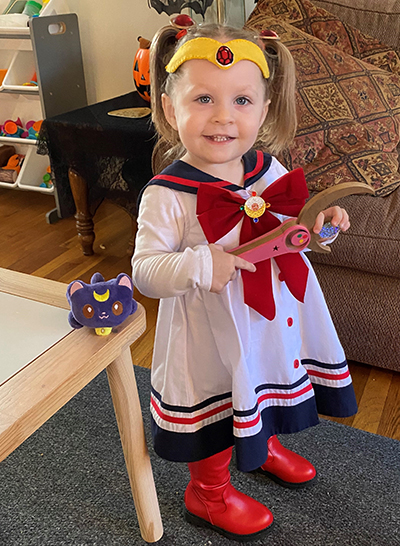
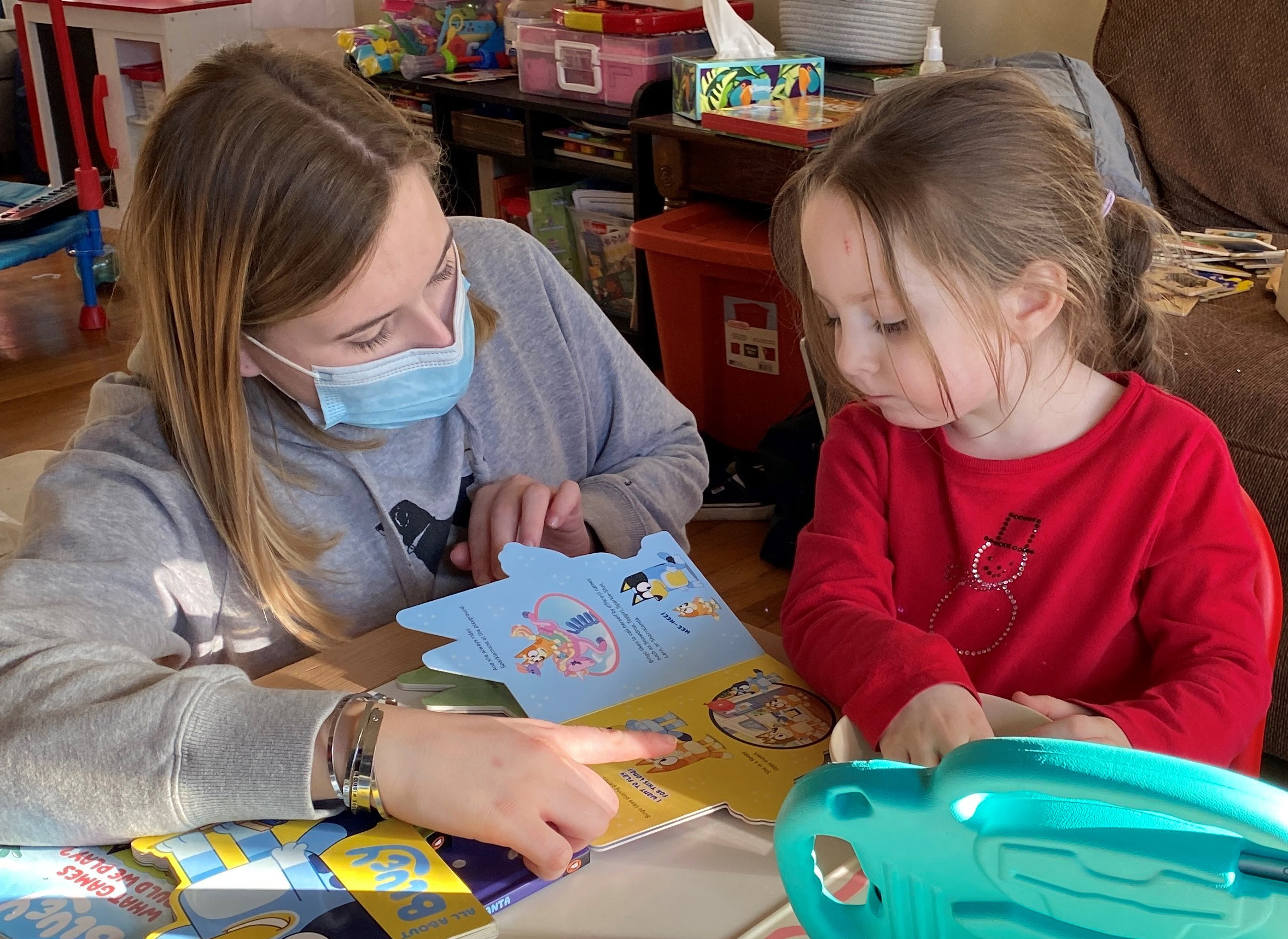 It was mid-pandemic,” says Alisha Ray, recalling when she and her husband, Bobby, began to worry their daughter, Luna, was regressing in her learning development. For more than a year, COVID had forced the family to change their routine and a lot more time was spent at home.
A once outwardly curious Luna, who was two years old at the time, had stopped showing interest in communicating with her parents.
Was it a phase she would grow out of?
Alisha and Bobby weren’t willing to sit idle and take that chance. They sought the guidance of a speech therapist at Lifespan, who, after careful evaluation, recommended early intervention and a program that would become a beacon of hope for the family—Bradley Hospital’s Intensive Behavioral Treatment (IBT) program. Nationally recognized, the program marries positive behavioral interventions with the power of technology and expert guidance to create a tailored learning environment for children with autism spectrum disorder.
 With IBT, behavioral health specialists work with children younger than age four, directly in their home for 20 to 30 hours per week. They utilize applied behavior analysis (ABA) treatment in what is a familiar and safe environment to improve communication abilities, social interactions, and behavioral and play skills. To maximize its efficacy, ABA treatment is individualized to each child and family, and behavioral specialists collaborate with school staff and other treatment professionals to impact all aspects of a child’s life.
While waiting to begin the IBT program, the Ray family was fortunate to experience a few months of early intervention for Luna. During this time, Alisha and Bobby met Karyn Blane, PsyD, the Director of Bradley Hospital’s IBT program, who answered questions and offered reassurance.
“We knew Luna was motivated by positive reinforcement,” says Bobby, “and that’s something we learned IBT at Bradley uses a lot of.” Bobby adds this leap of faith was one of, if not the best thing they could have done for Luna saying, “unless we try, we’ll never know.”
Upon admission to the IBT program, it was clear that the communication gap between Luna and her parents was challenging. Frustration was a constant for the young child, who struggled to express her feelings and needs effectively. The loss of momentum in Luna’s development cast a shadow over her potential, leaving her parents yearning for a breakthrough.
“When we met Luna, she had lost some of the skills she had at an earlier age, things like pointing, repeating words, and mimicking,” explains Dr. Blane. “But with ABA treatment, she began to increase eye contact, attention, and social awareness—and her communication, verbally, with pictures, and using an iPad application, improved.”
The incorporation of technology to facilitate learning is an important component of Bradley’s IBT program. Interactive apps on an iPad and other adaptive tools became valuable allies in Luna’s journey, offering her a way to express herself and engage with her surroundings. The transformation was gradual, but each step forward brought a sense of achievement and joy to the family.
Bradley’s team also played a pivotal role in fostering a supportive learning environment. From customized schedules to targeted activities, staff addressed Luna’s specific challenges by designing a roadmap for her parents that equipped them with the tools and strategies to connect with their child. By understanding and responding to Luna’s unique needs, it helped her to regain momentum while empowering her to navigate the world with newfound confidence.
“What Bradley gave us is hard to put into words,” says Bobby. “They helped us as the parents—who aren’t professionals—learn ways to improve interacting with Luna.”
Today, the once-frustrated family is communicating in ways they once feared would be impossible. Luna is repeating words and has a growing conversation range using the iPad. The barriers that for a time confined Luna’s voice have been dismantled, and a world of possibilities has re-opened.
“She has come so far in the last year, and we have so much hope for the future thanks to Bradley and IBT,” adds Alisha as she smiles. “The joy on Luna’s face as she successfully communicates her needs is a testament to the power of Bradley Hospital’s expertise.”
Highlights from The Pediatric Anxiety Research Center (PARC) at Bradley
Patient Reunion Draws Hundreds Back to Bradley
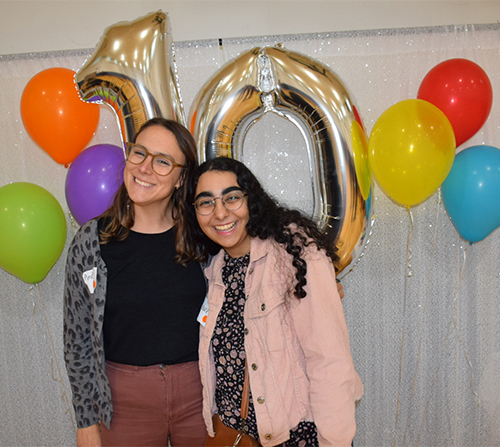 It might be hard to imagine former patients and families choosing to spend a rainy Saturday at Bradley Hospital, but that’s exactly what hundreds of them eagerly did in September—with many even traveling from out of state.
The reason? Bradley’s annual reunion for ‘graduates’ of its partial programs for Obsessive-Compulsive and Related Disorders.
Now in its eighth year, the reunion is an opportunity for youth and their families to come together with staff and other graduates to celebrate the successes made possible by their time healing at the hospital’s Pediatric Anxiety Research Center (PARC). PARC is nationally recognized as an integrated program that encompasses research and treatment. It provides evidence-based assessment and behavioral and pharmacological treatment to children and adolescents who have OCD, OC-spectrum, tic, and anxiety disorders.
“The success of the reunion is a testament to the effectiveness of PARC’s program and the dedication of its staff,” said Jennifer Freeman, PhD, Director of the Pediatric Anxiety Research Center. “Staff and families alike really look forward to reconnecting. It’s always wonderful to be reminded of the life-changing impact our work has on the lives of not only the children and adolescents we treat, but their entire families.”
IMPACT Outpatient Program Makes a Big Difference for Patients
The Pediatric Anxiety Research Center (PARC) at Bradley Hospital is a leader in developing strategies to deliver exposure-based cognitive behavioral therapy to children with symptoms of anxiety and obsessive-compulsive disorder.
 For years, patients have been effectively receiving exposure therapy at Bradley through partial hospital and outpatient programs. But with an ever-growing demand for services –and feedback from PARC patients and families for more home-based treatment—hospital clinicians needed to think differently about how to increase access to care. Their innovation led to a new outpatient program, called IMPACT (Improving Access to Child Anxiety Treatment), that brings exposure therapy to patients, “where the anxiety lives.”
Using a team-based model, patients come to Bradley outpatient once monthly to see a psychologist. For the other three weeks of the month, a specially trained exposure coach goes to the patient to provide exposure therapy.
“In an office setting, we practice exposure therapy, but it can be more relevant for patients to do exposures where they experience the anxiety, and that is often at their home or in the community,” says Associate Director of PARC, Jennifer Herren, PhD.
Whether the exposure coach works with a teen whose social anxiety is getting in the way of applying for a job or checking out at a store, or a child whose separation anxiety makes going to school a daily challenge, the exposure coach goes into the settings and uses gradual exposure to help them overcome the fears or worries.
“This treatment can really change the trajectory of a patient’s life, and being able to reach more patients with a team-based model is very exciting,” says Dr. Herren.
Donor Generosity Helps “Kids be Kids” During Treatment
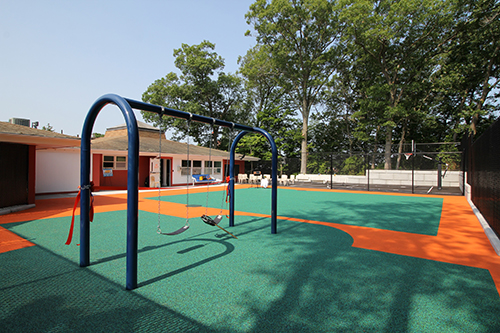 Over the past few years, Bradley Hospital has invested nearly $3 million to reimagine its play spaces, thanks to donor generosity. The improvements have had a tremendous impact on patients.
“When kids are with us, whether in a partial or inpatient program, they can’t be subjected to treatment nonstop, they need a break and fresh air,” says Chelsea Kopacz, MS, OTR/L, Manager of Rehab Services. “Opportunities to play contribute to the success of treatment; it’s so important to let kids be kids.”
Among major enhancements to Bradley’s campus are a renovated gymnasium, an updated playground, a transformed and secure inpatient courtyard, and a new sprawling therapeutic splash park. In the revamped gym, which is instrumental for occupational therapy, patients get to burn energy on its obstacle course and learn the fundamentals of team sports. It also allows for “special” things, like the Halloween trick-or-treating maze and the holiday workshop where kids created gifts for their families. In the future, Chelsea hopes the gym can be used to teach kids how to ride a bike.
“It doesn’t feel like a hospital when you’re in there,” she adds.
For the 18 children living in the Children’s Residential and Family Treatment program, known as CRAFT, an overhauled playground serves as the backyard. There are swings, 4-square, a basketball court, and space for water activities on hot summer days. The Dowling Courtyard, featuring specialized turf for year-round usage, is accessible from the acute care units. It allows kids who are not ready for other recreational spaces to enjoy outdoor play while safely remaining within the hospital’s walls.
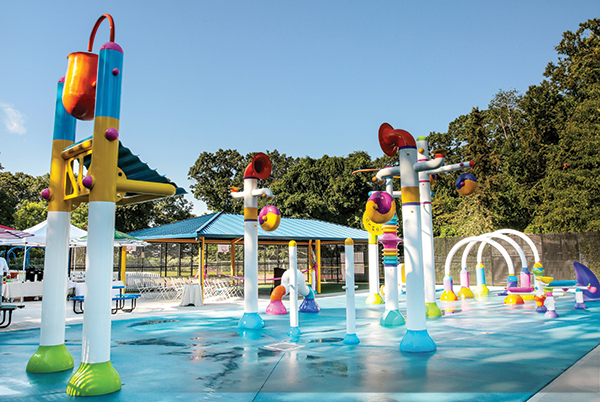 The pièce de resistance is the Murray Family Foundation Splash Park, which replaced Bradley’s dated pool and was supported by grants and a Bravo Bradley fund-a-need. Every element of the park was carefully selected and serves a purpose, from visual and sensory experiences to mist and big water splashes that offer the deep pressure feel some kids seek. There is also a special communications board for non-verbal patients to relate to play. Across all play areas, it is all about movement as a key to regulation and helping patients calm their body.
“Our kids often have poor body awareness and sense of movement, but when we incorporate play, it helps them to better regulate,” explains Chelsea. “They don’t realize this is part of their therapy, and that’s a good thing—because they’re having fun.”